What draws you to Lake Joseph might start with the water, but it often ends with architecture. From classic timber-and-stone cottages tucked into the pines to sleek glass pavilions that float over granite, the lake’s styles each deliver a different way to live, maintain, and resell on Muskoka’s most coveted shoreline. In this guide, you’ll learn how the major cottage and boathouse types look and live, how local rules shape design, and what to expect for privacy and long-term care. Let’s dive in.
What makes Lake Joseph unique
Lake Joseph sits within Muskoka’s Big 3 and concentrates many of the region’s most refined waterfront compounds. Along the same shoreline, you’ll see original heritage cottages, dramatic timber-frame lodges, and contemporary glass-and-stone statements. Parts of the lake fall under different townships, which means zoning, shoreline setbacks, and boathouse rules can change by location.
Local approvals also shape what gets built. Waterfront projects usually need permits and, for boathouses and docks, specific sequencing with the township and other authorities. If you are exploring a build or renovation, start early with the township’s guidance on building, demolition and construction requirements.
Core cottage styles
Heritage Muskoka cottages
The classic Muskoka look grew from late-19th-century influences and local materials. You’ll notice wood cladding or cedar shakes, deep porches and screened Muskoka rooms, heavy stone fireplaces, and great rooms framed by exposed beams. Interiors are often warm and wood-rich, with generous lake-facing windows and a plan built around gathering.
That authenticity carries strong emotional appeal when systems are upgraded with care. If you love the timeless feel, review the style’s defining elements and renovation approach through this overview of traditional Muskoka cottage design. Just remember that wood exteriors and cedar roofs demand steady upkeep to look their best and perform in Muskoka’s four-season climate.
Timber-frame and post-and-beam lodges
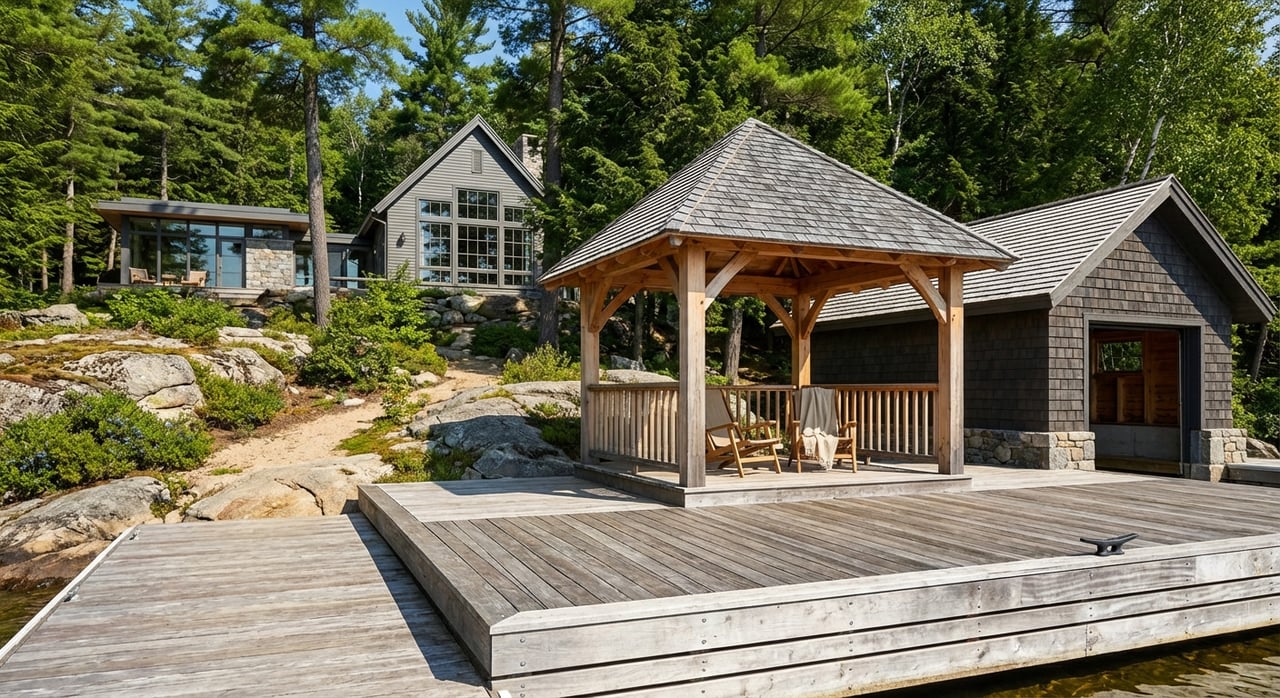
Timber-frame cottages celebrate structure. Big spans, vaulted ceilings, open plans, oversized stone hearths, and covered porches create a lodge-like presence that suits larger shorelines and family gatherings. Frames are both aesthetic and structural, often paired with modern insulation and engineered foundations.
The reward is longevity and drama when detailing and moisture control are correct. Expect a maintenance rhythm that includes monitoring finishes, gutters and flashings, and keeping wood clear of standing water. Learn more about how these systems are designed and maintained in a primer on timber-frame architecture.
Contemporary glass-and-stone
Modern Muskoka translates clean lines to the Canadian Shield. These cottages lean into minimal forms, steel or dark-stained wood accents, and walls of glass that frame the horizon. Interiors are open and bright, often stepping down to generous terraces and docks. For design inspiration, see a local take on modern lakefront architecture.
The tradeoff is technical. Large glazing areas look effortless but require high-performance units and careful detailing to control heat gain, heat loss, and condensation. Plan for premium window specs and professional cleaning, especially on multi-story glass walls. For a look at why this matters, review considerations for curtain wall and high-glazing facades.
Boathouses that set the scene
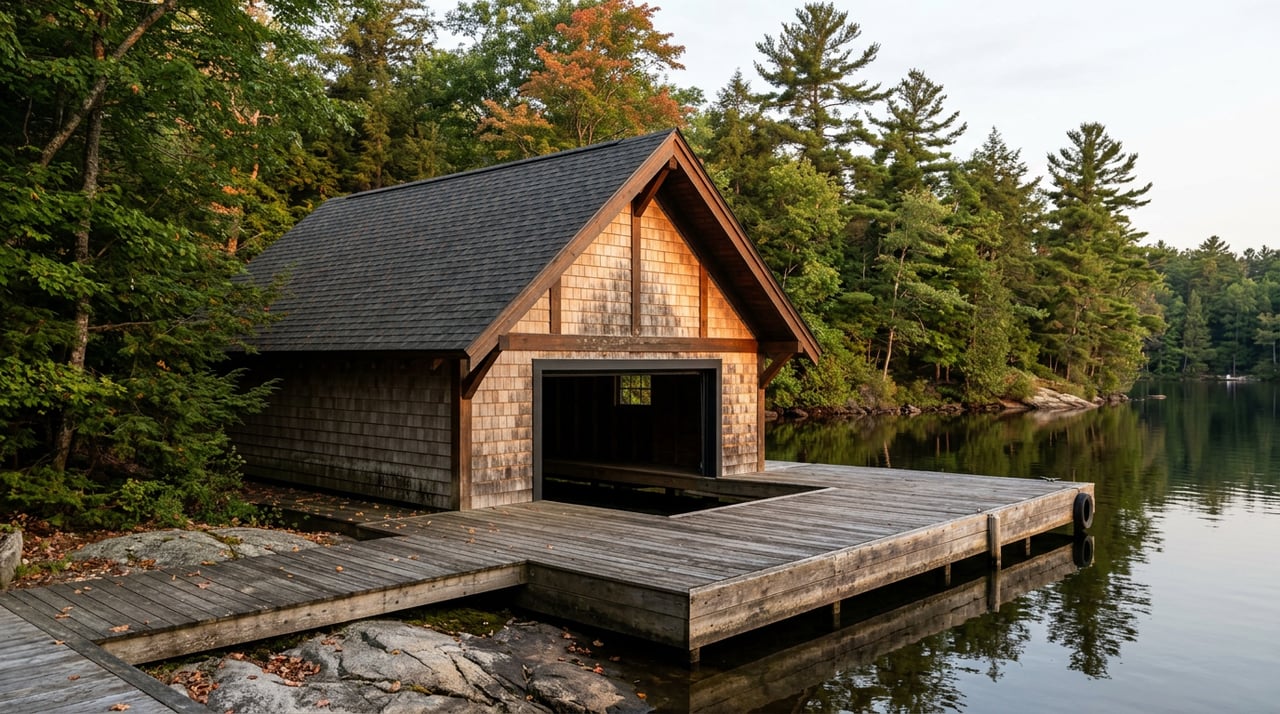
On Lake Joseph, the boathouse is often as defining as the cottage. You’ll see everything from classic single- or multi-slip structures to two-storey entertaining boathouses with compact upper levels and sculpted roof decks. Many of the rooflines, dormers, and carved-out deck choices you notice are direct responses to local by-laws.
Zoning typically sets setbacks, frontage tiers, and strict caps on second-storey size and use. That is why so many designs keep upper areas small, avoid full dwelling units, and integrate decks within the roof volume. For a sense of the rules that influence form, review the Township of Muskoka Lakes zoning by-law framework for waterfronts and coordinate early with the local building department on the best path to a permit.
Style and maintenance
Different cottage styles age differently in Muskoka’s climate. Use this quick guide to budget time and dollars wisely.
Heritage wood exteriors
- Expect periodic sealing or painting, cedar shake inspection, and moss or mildew cleaning on shaded elevations.
- Cedar roofs offer a classic look but shorter service life than metal in Ontario conditions. For planning, compare material lifespans in this Ontario roofing almanac.
Timber frames
- Keep timber clear of ground moisture, confirm proper flashing where wood meets stone, and maintain gutters and drainage.
- Inspect for insects or localized rot and refresh exterior finishes as needed. A practical overview of longevity priorities appears in this guide to timber-frame durability.
Glass-heavy modern cottages
- Budget for premium glazing to reduce heat loss and solar gain, plus seasonal cleaning on hard-to-reach panes.
- Plan for eventual insulating glass unit replacement. Technical notes on performance tradeoffs are summarized here: curtain wall facade considerations.
Boathouses and docks
- Schedule structural inspections, track wear on crib or steel supports, and monitor corrosion.
- Some communities regulate de-icers and shoreline equipment for safety and environmental reasons. For context on waterfront planning, see FOCA’s land use resources.
Privacy by design
Glazed pavilions deliver incredible views, but they can read transparent from the water and neighbours. Heritage cottages and lots with preserved tree cover often feel more private right away. Before you clear trees, remember that municipalities and stewardship programs protect shoreline vegetation to support habitat and water quality.
Plan for layered planting, subtle screening, and strategic setbacks instead of clear-cutting. A practical, lake-friendly approach to privacy is outlined in this shoreland health guide.
Resale insights
On Lake Joseph, buyers often prioritize wide frontage, usable depth off the dock, a compliant or buildable boathouse, privacy, and current permits and septic records. Both well-maintained heritage cottages and thoughtfully designed modern builds can perform strongly when quality and stewardship are evident. The market shifts by year and price band, so lean on current local data when timing your sale or purchase.
Risks that can reduce price or delay closing include unpermitted shoreline structures, aging or undocumented septic systems, or work done without approvals. Septic compliance is a common gating item. Learn the basics of the township’s septic inspection program and ask for permits, pump-out receipts, and recent inspection reports early in your due diligence.
Due diligence checklists
Documents to request
- Building permit history for the cottage, boathouse, and docks, with any engineer reports for boathouse or dock structures. Start with the township’s building and construction guidance.
- Septic permit and inspection history, recent pump-out receipts, and any township re-inspection notices.
- Current survey with shoreline frontage, plus any agreements related to shore road allowances or lakebed occupation if applicable.
- Records of tree removal, site alteration, or shoreline modification permits.
Inspections and advisors
- A structural or boathouse engineer to assess existing docks and superstructure.
- Septic inspection and, if you draw lake water, a water quality test.
- Early contact with the conservation authority if the property sits in a regulated area.
Choosing the right style
Pick the style that matches how you plan to live at the lake. If you want cozy, textural spaces with a timeless feel, a heritage or timber-frame cottage may be your lane. If you crave uninterrupted views and open interiors, a modern glass-and-stone design can be extraordinary with the right glazing and shading plan.
Balance beauty with cost to own. A standing seam metal roof typically outlasts cedar with less upkeep, while triple or high-performance double glazing can reduce long-run energy spend on glass-forward homes. Whatever you choose, confirm what the site and bylaws allow, then design to the shoreline carefully to preserve privacy and habitat.
Work with a trusted local team
Every shoreline on Lake Joseph tells a story through its architecture, permits, and stewardship. You deserve a partner who can read that story quickly, anticipate issues, and connect you with the right designers, builders, and inspectors. If you are planning to buy, sell, or build, reach out to The Blair Group for private guidance, on-water viewings, and discreet next steps.
FAQs
What cottage styles are most common on Lake Joseph?
- You’ll most often see heritage Muskoka cottages, timber-frame lodges, and contemporary glass-and-stone designs, plus signature boathouses that anchor the waterfront experience.
Do I need a permit for a new boathouse or dock?
- Yes. Waterfront construction typically requires a township building permit and sometimes other approvals. Start early with the local building department to confirm sequencing and requirements.
Are two-storey boathouses allowed on Lake Joseph?
- In some zones, yes, but with strict limits on size, setbacks, and use. Upper levels are often compact and non-dwelling by design because of by-law caps. Confirm the current rules with the township.
Which cottage style is lowest maintenance?
- Generally, modern cottages with durable cladding and metal roofs can reduce exterior upkeep, while wood-rich heritage and timber-frame exteriors need more routine care. Glass-heavy designs add window cleaning and glazing-specific maintenance.
What paperwork should I see before buying a Lake Joseph cottage?
- Ask for building permits, septic permits and pump-out records, recent inspections, surveys, and any shoreline or tree-removal permissions. These items can affect insurance, financing, and closing timelines.